7 Signs Your Deck Needs to Come Out
1. Boards flex or feel soft underfoot
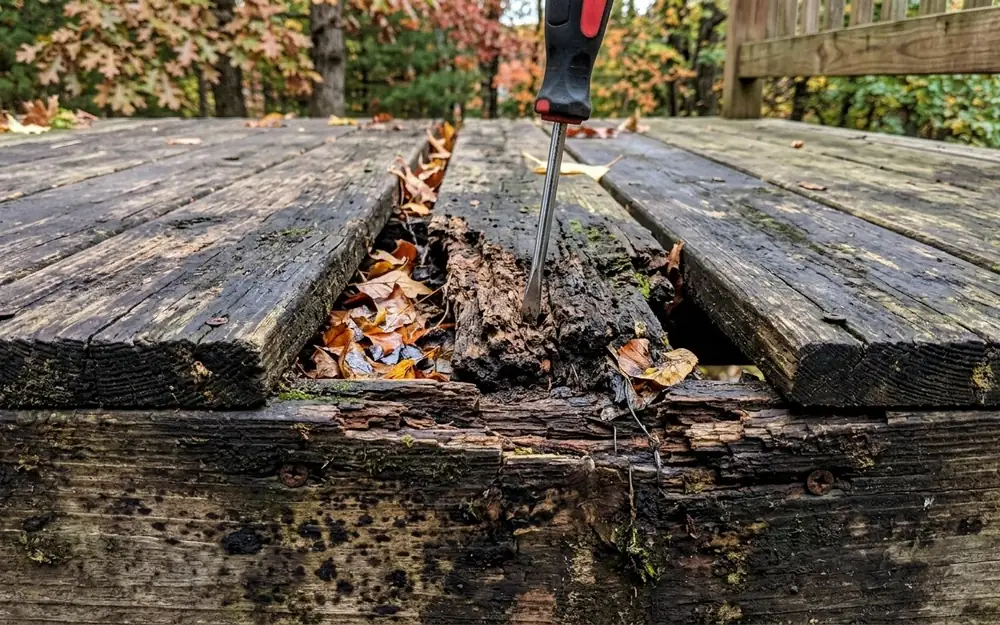
A springy board means rot has usually reached the joist underneath, not just the board. Push a screwdriver into the joists along the edges and around the stairs. If it sinks in easily, the frame is failing.
2. Railings move when you lean on them
A loose railing is the most dangerous problem on a deck. If new screws do not hold because the post or rim board behind them is soft, the fix is structural, not cosmetic.
3. Posts have sunk, tilted or lifted
Frost heave moves footings that were not set deep enough. Once posts are out of plumb, the whole frame twists, doors to the deck stick, and boards start to split along the fasteners.
4. The ledger board is pulling away from the house
The ledger is the board that fastens the deck to your house. Gaps, rust streaks or water staining at that joint mean water may be getting into the wall as well as the deck. This is the sign not to ignore.
5. Rot and fungus at the joists and stairs
Dark, crumbly wood or fungus where boards meet joists, at stair stringers and around posts means the decay is spreading where you cannot see it.
6. Refinishing no longer helps
If you sand and seal every year and the boards still crack, cup and splinter within months, the wood has reached the end of its life.
7. You are replacing it anyway
Many homeowners take an old deck out because a new deck, a patio or a garden is going in its place. Most deck builders quote the build only, so the tear-out is a separate job you need to schedule first.
When Repair Still Makes Sense
Not every tired deck needs removing. Repair is reasonable when:
- the problem is limited to a few surface boards
- the joists, beams and posts are solid when you probe them
- the railings are firm once tightened
- the deck is level and the ledger joint is dry
If most of the deck fails the screwdriver test, repairs tend to turn into a rebuild one board at a time. That is when a full tear-out is the better spend.
Check the Permit Rules Before You Rebuild
Removing a deck is rarely the step that needs a permit; building the next one often does. The City of Calgary's deck permit page says a building permit is required to build or rebuild an uncovered deck whose surface is higher than 0.6 m (2 ft) above grade at any point, and for any covered deck. A deck that is 0.6 m or lower at every point does not need one.
Knowing that early helps you decide between a low, permit-free platform or patio and a raised replacement, and it keeps your rebuild on schedule once the old deck is gone.
What a Deck Tear-Out Involves
A safe removal follows an order: railings first, then deck boards, then joists and beams, then posts and footings if they are coming out. The ledger board comes off the house carefully so the wall is left sound.
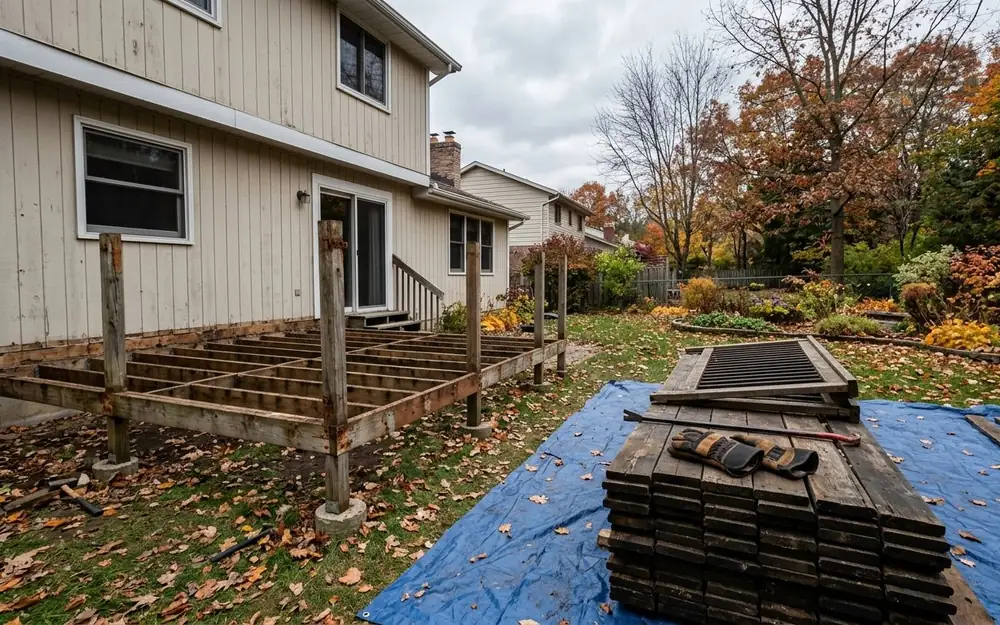
A few things to plan for:
- Footings. Concrete piles can stay if the new deck reuses the layout, or be dug out and hauled. Ask for them to be priced separately.
- Treated lumber. Pressure-treated wood cannot be recycled or burned. It goes to a licensed transfer station, while clean lumber and metal hardware are separated for recycling.
- Nails and offcuts. The footprint should be raked clean, so the yard is safe for kids and pets.
- Timing with your builder. The site has to be clear on the day your new deck or patio crew arrives.
Book a Deck Removal Quote
If your deck is showing two or more of these signs, it is worth getting the tear-out priced now. With deck removal in Calgary from Happy Panda Junk Removal, the crew takes the deck apart in order, pulls posts and footings if you want them out, sorts lumber for recycling, and rakes the site clean. We can work around your builder's start date.
Most decks can be quoted from a photo and rough dimensions. Quotes are free, financing is available for larger jobs, and we are open seven days a week across Calgary and nearby towns. Taking down a shed at the same time? See our guide to what shed removal costs in Calgary.
Call (403) 988-9888 or send us a photo for a free quote to book deck removal in Calgary.